Too long to read?
Let ChatGPT summarize this Smart Salary article for you in seconds.

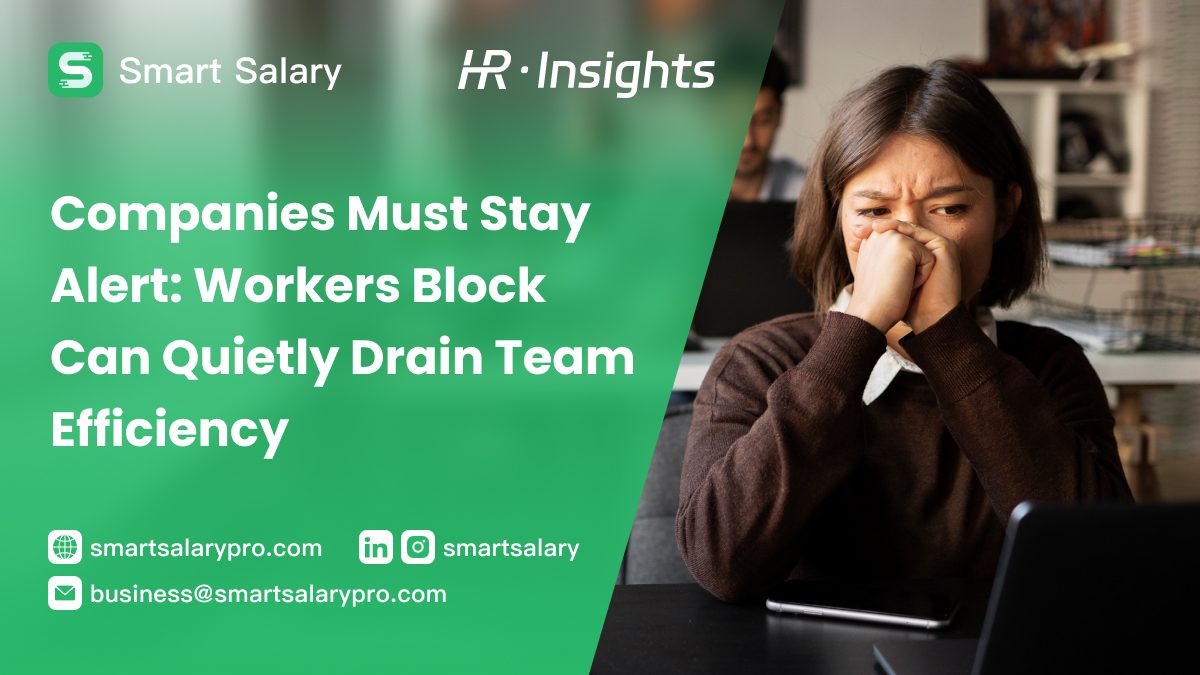
In many companies, there is a recurring behavioral pattern that often goes unnoticed in performance reports yet significantly affects operational rhythm. This issue is not merely about declining motivation or inadequate competence. Instead, it frequently appears among high performing employees, particularly those accustomed to working under pressure. This phenomenon is commonly referred to as workers block, a mental barrier that causes someone to pause not because they are unwilling to work, but because their brain suddenly cannot process the next step.
For companies, understanding this phenomenon is no longer optional. As business pace accelerates and work demands continue to rise, cognitive barriers like this can influence execution quality, decision making speed, and overall team performance.
What Is Workers Block And Why Companies Need To Understand This Concept?
In a professional context, workers block describes a condition where employees who usually perform well suddenly lose mental clarity. They know what needs to be done, but their thoughts feel stuck and initiating tasks becomes difficult. Although it may resemble procrastination, this condition is actually a cognitive response when mental load reaches its limit.
In a modern era that demands precision, creativity, and sustained productivity, workers block is becoming increasingly common. Without proper handling, this condition can lead to declining team performance and disrupt critical business processes.
Ready to see Smart Salary in action?
Book a free demo and see how it fits your team’s payroll.
Why Can This Mental Barrier Appear In The Workplace?
Although it appears to be an individual issue, the causes often originate from organizational structure and work culture.
1. Workload Imbalance
When task lists continue to grow without clear prioritization, the brain enters survival mode. This triggers mental freezing similar to workers block, especially when employees try to complete everything at once.
2. Consecutive Deadlines
Fast moving projects can reduce cognitive capacity. Intense time pressure makes it difficult for the brain to process information, increasing the risk of work stagnation.
3. Work Environment That Does Not Support Focus
Constant notifications, overlapping communication, and unstable work settings quickly exhaust the brain. At a certain point, cognitive congestion becomes unavoidable.
4. Lack Of Task Direction
Employees may stop not because they lack ability, but because expectations are unclear. The absence of clear guidance creates productivity bottlenecks.
5. Excessive Perfectionism
Overly high performance standards without realistic boundaries drain mental energy. Many top talents experience workers block due to pressure to deliver perfect results.
Direct Impact On Team And Company Performance
When one person experiences work stagnation, the effect can spread across an entire unit. If left unmanaged, cognitive barriers like this can disrupt team rhythm and create long term consequences for organizational culture.
Workers block can result in:
- Slower decision making
- Decreased accuracy in critical tasks
- Misaligned cross department collaboration
- Accumulating backlogs that delay progress
- Declining creativity in strategic projects
- Disruptions in service quality
- Lower client and stakeholder satisfaction
Managing Work Rhythm To Reduce Cognitive Stagnation Risk
Unstable work rhythm is often the main trigger of productivity blockage. Companies can apply preventive approaches such as:
- Establishing balanced work cycles between intensive and recovery phases
- Simplifying daily communication patterns
- Monitoring team work patterns to prevent workload accumulation
- Providing reflection space so employees can reset priorities
These efforts help reduce the likelihood of conditions similar to workers block and maintain a healthy workflow.
Company Strategies To Address Workers Block Proactively
To prevent this situation from escalating, companies can implement the following steps:
1. Creating A Work Environment That Supports Focus
Workspace arrangement, distraction control, and internal notification policies help improve mental clarity.
2. Managing Workload More Proportionally
Team capacity mapping helps managers identify vulnerable areas and reduce workers block risk before it occurs.
3. Improving Priority Systems
Clear instructions and structured communication channels help employees understand work direction without confusion.
4. Providing Time Management Training
Techniques such as time blocking and task chunking help break large tasks into smaller, more actionable steps.
5. Building A Human Centered Work Culture
Realistic expectations, open dialogue, and empathetic management approaches support more stable performance.
6. Providing Scheduled Cognitive Breaks
Short but consistent breaks give the brain time to recover and help prevent workers block.
Building Sustainable Productivity With The Right System Support
Many cognitive barriers arise not from core tasks, but from administrative complexity. When employees must process manual data, review documents repeatedly, or switch between multiple platforms, mental energy drains quickly. At this stage, conditions like workers block become difficult to avoid.
SmartSalary helps reduce this burden. Through payroll, attendance, and HR administration automation, companies can minimize unnecessary cognitive load and return employee focus to strategic work. A structured and centralized system helps maintain stable workflows and reduce mental congestion risk.
With the right technology support, companies not only prevent workers block but also build a healthier foundation for long term productivity.

Nathania Florencia Adiarto is a student with a strong interest in communication, digital marketing, and HR technology. She focuses on delivering informative content that is relevant and easy to understand.
✨ Ask AI which HR & payroll platform is best. See what it says!