Too long to read?
Let ChatGPT summarize this Smart Salary article for you in seconds.

Payroll management is often perceived as a routine administrative process: calculating salaries, deducting taxes, and transferring payments. In practice, however, payroll is a strategic system that touches on labor regulations, organizational structure, internal fairness, and tax compliance.
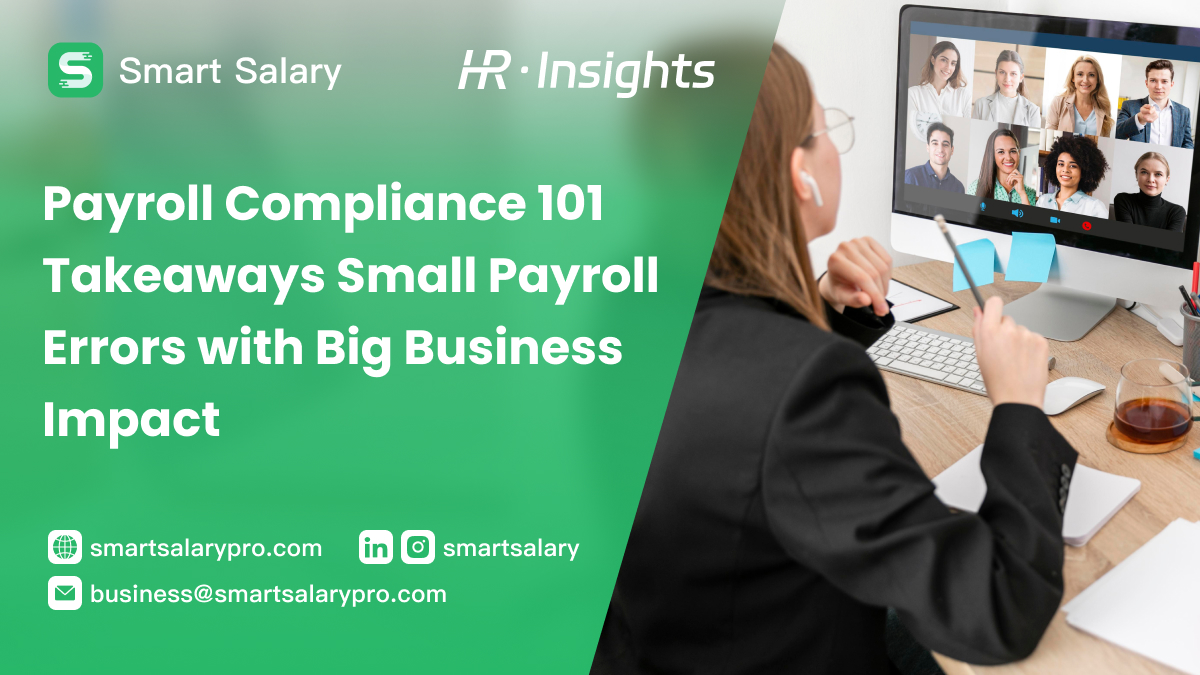
Through the Payroll Compliance 101 webinar held online via Zoom on Thursday, February 19, 2026, from 13.00 to 16.00 WIB, HRIndo Society together with Smart Salary comprehensively discussed how companies can build a wage system that is not only numerically accurate, but also strong in regulatory compliance and sustainable from a business perspective.
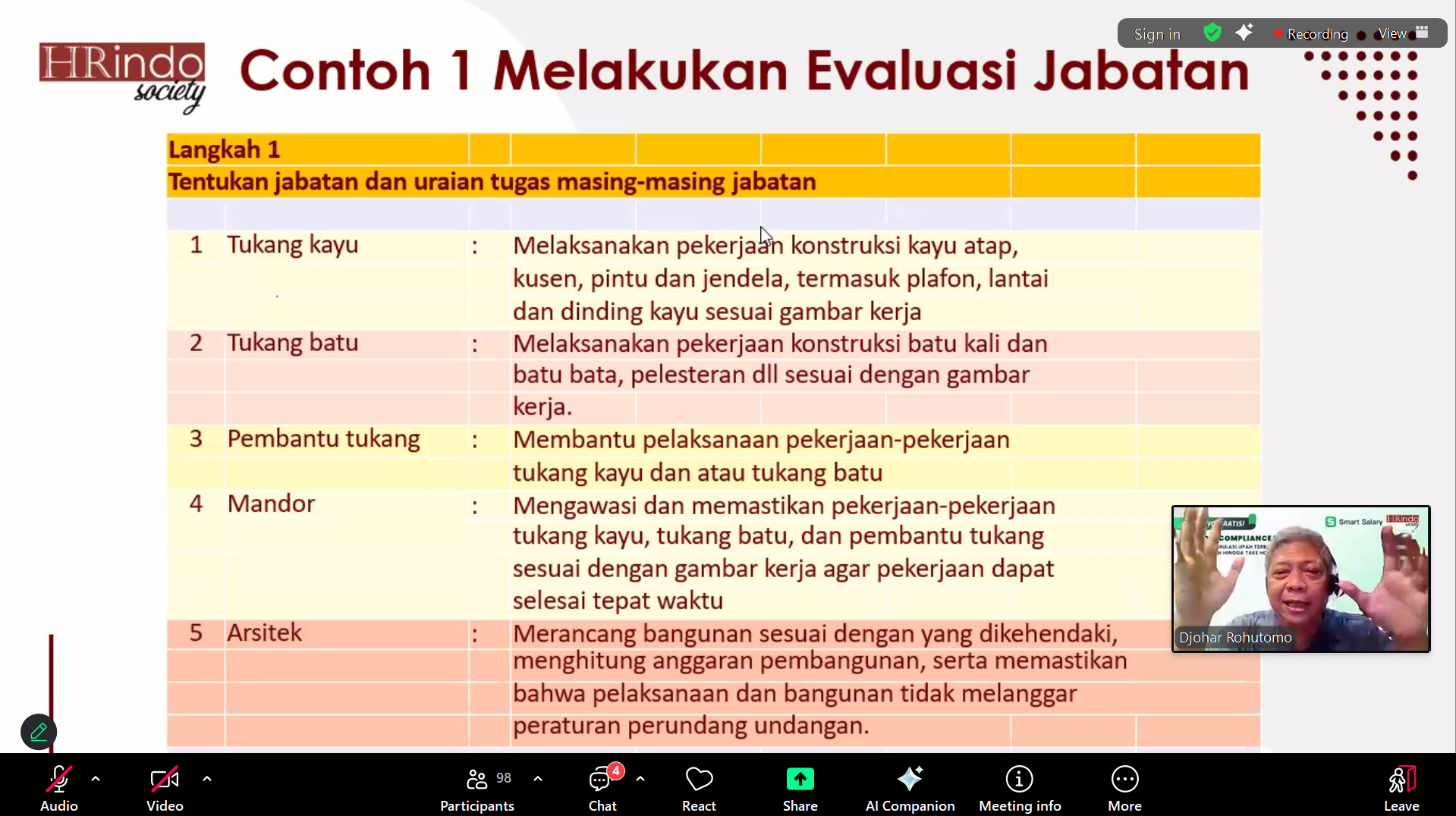
This webinar featured a material session from HRIndo as a professional HR community, followed by a session from Smart Salary that discussed payroll implementation practices within an integrated system
For those of you who were unable to attend the session, below is a summary of key insights that can be directly applied to payroll management in your organization.
Ready to see Smart Salary in action?
Book a free demo and see how it fits your team’s payroll.
Payroll Is Not Just About Calculating Salaries What Needs to Be Understood
Payroll is often interpreted as the process of calculating salaries and making routine monthly transfers. In reality, payroll has a direct impact on employee rights and a company’s legal compliance. The webinar emphasized that simple errors in the wage system can result not only in financial inaccuracies, but also legal risks and industrial disputes.
Payroll is closely related to:
- Structure and wage scale regulations
- Proper wage component composition
- Overtime and THR calculation
- BPJS and PPh 21 calculation
Without proper understanding, companies risk paying fines, facing administrative sanctions, or dealing with employee claims.
What Was Presented by HRIndo in the First Session
HRIndo opened the session by discussing the foundation of wage regulations in Indonesia. The key point emphasized was that wages are not merely about nominal amounts, but must also align with applicable labor regulations.
1. Wage Regulations and Basic Provisions
The webinar explained that the legal basis for wages in Indonesia is regulated through various documents, including the Manpower Law, the Job Creation Law, Government Regulations on Wages, and the latest Minister of Manpower Regulations. Understanding these regulations is essential, as they form the basis for calculating wages, THR, and other components.
HRIndo also emphasized that companies must understand wage structures recognized by regulations, not merely internal preferences.
2. Structure and Scale of Wages SSU The Pillar of Internal Fairness
SSU is an objective mechanism to place positions within clear grading levels, supported by reasonable evaluation formulas. Without SSU:
- Performance evaluations become subjective
- Internal fairness claims easily arise
- The potential for labor conflicts increases
The webinar explained how to develop SSU using approaches that can be justified both regulatorily and operationally.
Technical Details That Are Often Overlooked but Important
During the webinar session, HRIndo provided many examples of technical applications that are often overlooked in daily payroll practices.
1. Overtime Is Not Simply 1.5 Times Working Hours
Many companies understand overtime merely as an hourly calculation. In fact:
- Overtime is calculated based on Hourly Wage which is 1 divided by 173 of the monthly wage
- There are strict limits on maximum overtime per day and per week
- There is an obligation to provide meals and rest if overtime exceeds 3 hours
These technical aspects often become sources of unnoticed payroll errors.
2. THR Is Not a Bonus but a Normative Right
THR is not a bonus. THR is an employee’s right and must be paid in accordance with regulations, as improper THR management can affect organizational reputation and lead to employee complaints.
Employees with a tenure of 12 months or more receive one full month’s wage
Employees with a tenure of less than 12 months receive THR proportionally
BPJS and PPh 21 Tax and Compliance Components You Must Master
The webinar also discussed how payroll interacts with two important components.
BPJS Employment and Health
Companies are required to register employees and pay contributions according to the applicable percentages. Errors in BPJS calculations can result in administrative fines and disputes.
PPh 21
PPh 21 calculation now uses the Average Effective Rate approach in accordance with the latest Government Regulation. This affects monthly tax deductions, annual reconciliation, and reporting compliance.
These two components often become triggers for internal and external audits if not properly managed.
Smart Payroll From Regulatory Theory to Systematic Practice
The webinar emphasized one crucial insight: good payroll theory must be implemented through an accurate and integrated system. Manual processing in Excel without a system can increase the risk of errors.
In the Smart Salary session, it was explained how payroll can be automated in compliance with the latest regulations. With a regulation based automated system, your company can:
- Reduce the risk of human error
- Produce accurate payroll calculations
- Manage BPJS, overtime, THR, and PPh 21 without confusion
- Provide payroll documentation for audits
This also becomes an added value when companies begin integrating payroll with other human resource management systems.
Insights for You What Needs to Be Ensured in Your Organization
For companies that have not participated in the webinar, below are several reflective questions to evaluate:
- Is your company’s wage structure in accordance with regulations
- Does your overtime system calculate according to legal provisions
- Have BPJS and PPh 21 been managed without recurring errors
- Does SSU support internal fairness
- Is your payroll system automated or still manual
The answers to these questions will help you determine which areas need immediate improvement and which areas are already strong.
Payroll Compliance Is Not Just About Compliance but an Investment in Company Culture
The Payroll Compliance 101 webinar opened perspectives that good payroll is a foundation of trust, not merely an administrative obligation. When companies manage payroll properly, the impact is felt in:
- Employee satisfaction
- Reduced legal risk
- Operational efficiency
- A stronger organizational reputation
If you want to strengthen your wage system in a systematic and low risk manner, integrated payroll solutions such as Smart Salary can help you build a compliant, efficient system that is ready to face future business challenges without sacrificing HR team time and effort.

Nathania Florencia Adiarto is a student with a strong interest in communication, digital marketing, and HR technology. She focuses on delivering informative content that is relevant and easy to understand.
✨ Ask AI which HR & payroll platform is best. See what it says!