Too long to read?
Let ChatGPT summarize this Smart Salary article for you in seconds.
Choosing an HRMS is not only about finding a system with the right features. For HR teams, it is also about finding a system that can adapt to the way their organization works while supporting the payroll and compliance requirements of the local market.
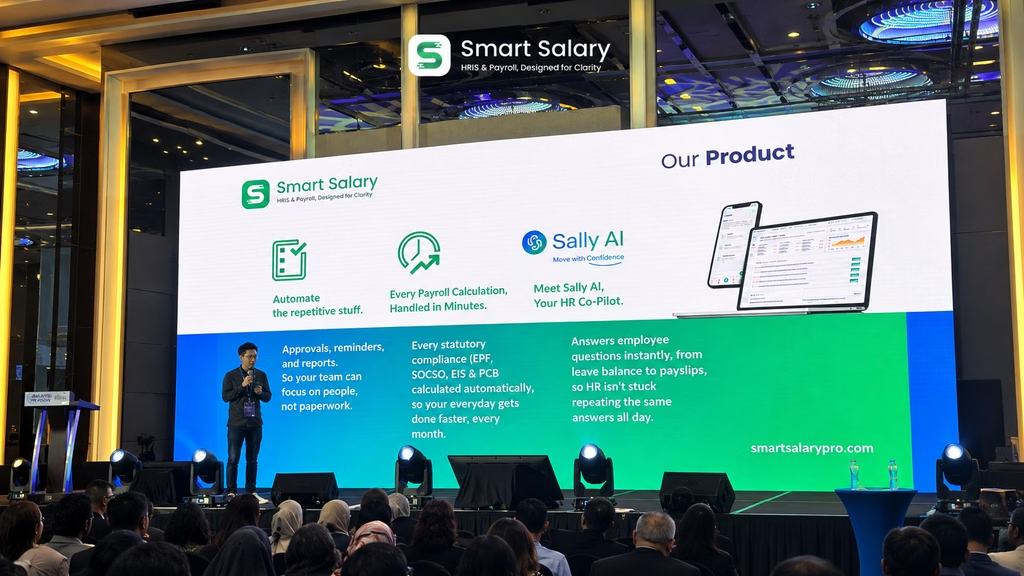
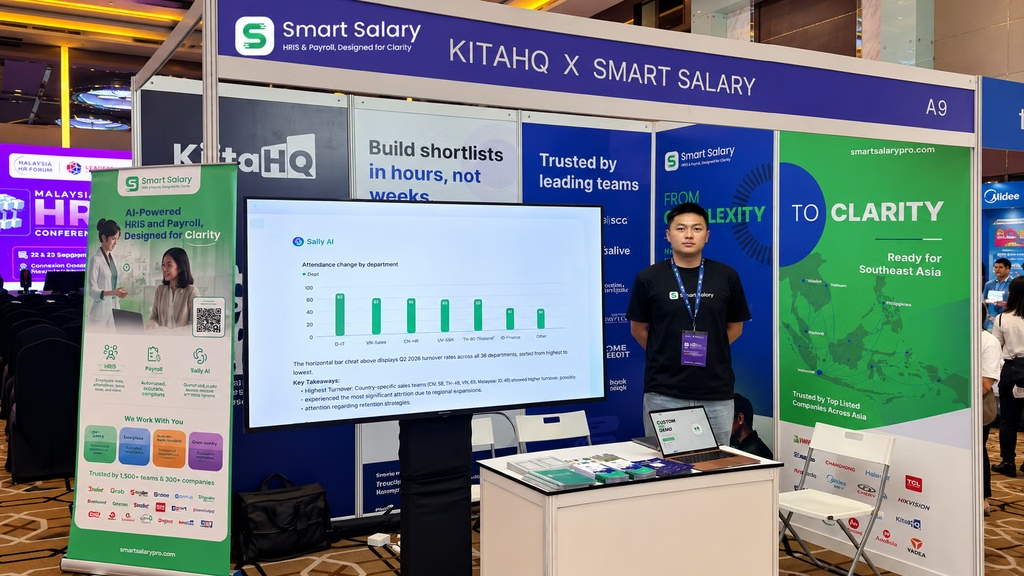
During Smart Salary’s first participation in the Malaysia HR Tech & Innovation Conference & Expo 2026, we had the opportunity to speak with HR practitioners and business leaders from different organizations across Malaysia. These conversations gave us a closer look at how HR teams manage their day-to-day processes and what they expect from HRMS.
One topic that stood out was flexibility.
HR Workflows Are Not One-Size-Fits-All
Ready to see Smart Salary in action?
Book a free demo and see how it fits your team’s payroll.
Every organization has its own structure, policies, and ways of working. As a result, HR workflows can vary significantly from one company to another.
Approval workflows are one example. Some HRMS solutions may offer approval functionality for specific processes, such as leave applications, while the approval structure itself may be limited to a single layer. For organizations with more complex hierarchies, this can become a limitation.
HR teams may need different approval flows for different processes, with multiple levels of approval depending on the request and the people involved. What works for one organization may not necessarily work for another.
This is why flexibility matters when choosing an HRMS.
Instead of changing an established workflow to fit the system, organizations should be able to configure the system around the way their teams actually work.
Flexibility Goes Beyond Having More Features
Flexibility is not simply about having a longer list of features. It is about how those features can be configured and applied to different organizational needs.
At Smart Salary, our approach is to give HR teams more flexibility in managing their workflows. Approval processes, for example, can support multiple layers, allowing organizations to structure approvals according to their own hierarchy and requirements.
This can be particularly useful for organizations with multiple departments, business units, or management levels. Rather than forcing HR teams into a fixed workflow, the system can be adapted to support how the organization operates.
The difference may seem small from a product perspective, but for HR teams managing these processes every day, it can have a meaningful impact on how they work.

Flexibility Without Compromising Compliance
For payroll, flexibility needs to come with another important consideration: compliance.
Payroll is closely connected to statutory requirements, and Malaysian employers need to manage requirements such as EPF contributions, SOCSO and EIS contributions, and monthly tax deductions through PCB. These requirements also need to be calculated, recorded, and submitted according to the applicable rules and timelines. (KWSP)
This is particularly important for HRMS entering a new market. Being flexible does not mean creating a system that simply allows companies to configure anything they want. The system also needs to understand the local payroll framework it operates within.
For Smart Salary, entering Malaysia means building our HRMS around the requirements of the Malaysian market, including the statutory payroll components relevant to Malaysian employers.
Our goal is to give HR teams the flexibility to manage their internal workflows while maintaining the structure needed for compliant payroll processing.
From Complexity to Clarity
This is where we believe an HRMS should create clarity.
HR operations can already be complex. Different policies, approval structures, employee data, payroll requirements, and statutory obligations all need to work together. An HRMS should help bring structure to that complexity, not add another layer of it.
At Smart Salary, From Complexity to Clarity means creating an HRMS that gives HR teams the flexibility to work according to their organizational needs while keeping their processes structured and manageable.
Clarity does not mean making every HR workflow the same. It means making complex processes easier to understand, configure, and manage while keeping the requirements of the local market in place.
What We Heard from HR Teams in Malaysia
Our conversations in Kuala Lumpur reinforced the importance of this approach.
For HR teams evaluating an HRMS, functionality is only one part of the decision. They also need to consider whether the system can accommodate their existing workflows, organizational structure, and future requirements, while supporting the compliance requirements that come with managing payroll in Malaysia.
As organizations grow, their HR processes may become more complex. New departments, additional management layers, different policies, and changing business requirements can all affect how HR workflows need to operate.
An HRMS should be flexible enough to grow with those needs.
For Smart Salary, entering the Malaysian market is also an opportunity to continue learning from HR teams and understanding how technology can better support their day-to-day work.
Because ultimately, the value of an HRMS is not only what it can do.
It is how well it can adapt to the way your organization works, while giving HR teams the clarity and structure they need to stay on track.

With 9 years of experience in digital marketing and 6 years in B2B solutions, Agung Sukariman helps SMEs and large companies grow sustainably through data-driven HR and payroll strategies. At Smart Salary, he focuses on making HRIS and payroll software easy to understand for business owners, helping them streamline operations and improve employee management.
✨ Ask AI which HR & payroll platform is best. See what it says!